A sensory world
Compound eyes excel at detecting movement and provide a wide field of view. Many butterflies see ultraviolet markings on wings and flowers. Antennae carry chemical and mechanical receptors, while the feet can assess plant chemistry through contact.
Ultraviolet
Patterns outside human vision can guide courtship and feeding.
Touch and vibration
Fine hairs detect air movement and contact across the body.
A straw that coils
The proboscis consists of paired structures that lock together into a flexible tube. Muscles uncoil it for feeding; when not in use, it rolls beneath the head. Butterflies drink nectar, sap, fruit juices, and mineral-rich moisture depending on species.
Three body regions
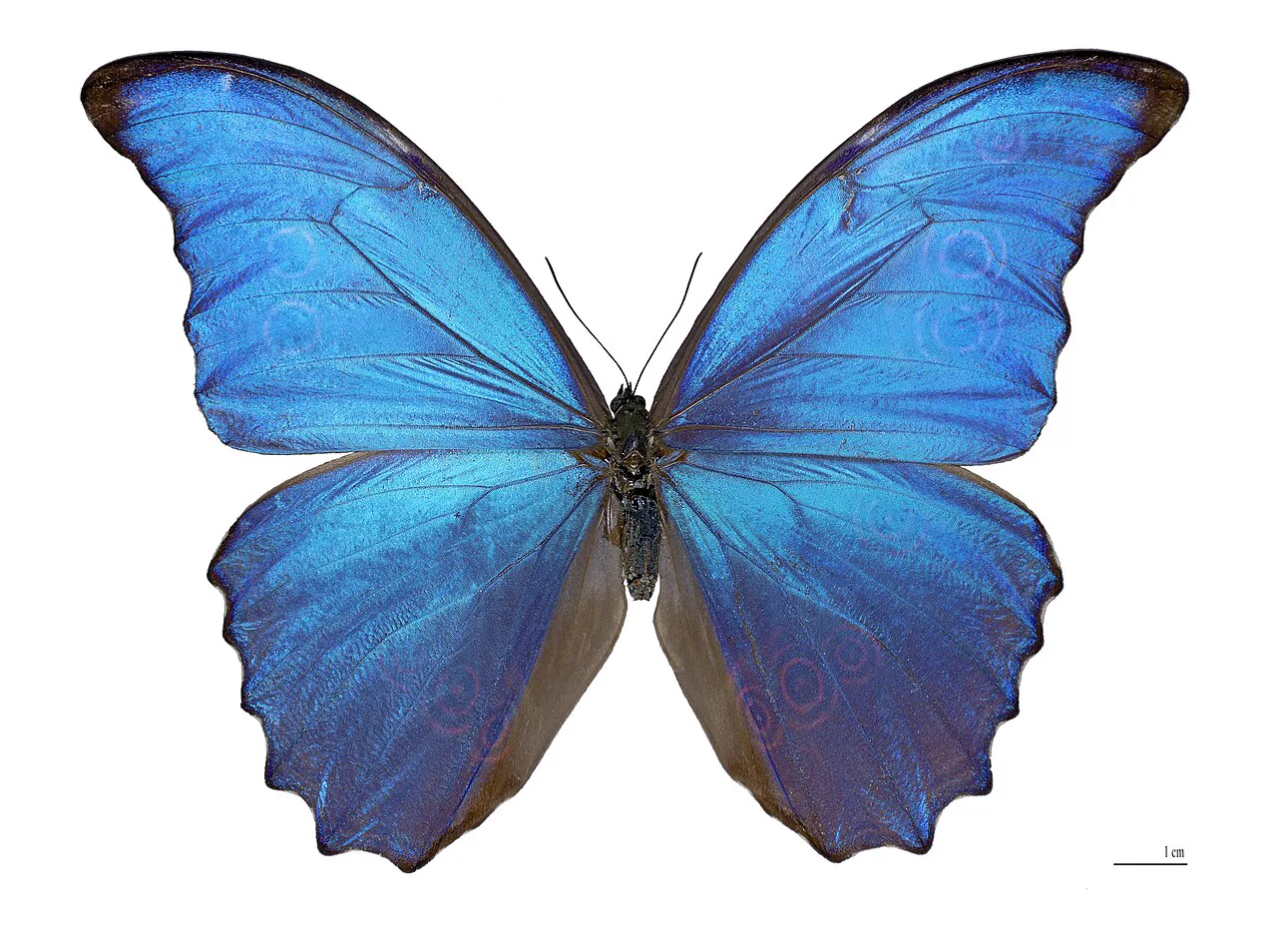
The head carries the eyes, antennae, and mouthparts. The thorax contains powerful flight muscles and anchors all six legs and four wings. The abdomen houses much of the digestive, respiratory, and reproductive anatomy. Oxygen reaches tissues through a branching network of tubes connected to openings called spiracles.
Flexible flight
Butterflies do more than flap up and down. Their wings twist and change angle through each beat, generating lift and thrust. Forewings and hindwings overlap and move as coordinated surfaces. Species differ in style: some dart, some glide, and some soar by using rising warm air.

Warm enough to move
Butterflies rely strongly on external heat. Basking posture, wing color, body orientation, shelter, and the choice of a sunlit microhabitat all help regulate temperature. When the thoracic flight muscles are too cool, controlled flight becomes difficult.
Basking
Some species open the wings broadly toward sunlight; others angle or close them to manage heat.
Microclimate
A sheltered patch only a few meters away can be warmer and less windy than exposed surroundings.