Biology · 01
Wings are living structures. Their scales are not.
Turn the note →Biology
Wing veins carry fluid, nerves, and airways. The overlapping scales are modified hairs that can rub away without growing back.
Field notes and knowledge check
Turn each field note to reveal the science, then test what you observed. Every fact and question remains visible without animation.
Nine field notes
Use a mouse, tap, Enter, or Space to turn a note. The front introduces an observation; the reverse explains what is happening.
Wing veins carry fluid, nerves, and airways. The overlapping scales are modified hairs that can rub away without growing back.
Butterflies often bask with wings positioned to absorb or reflect heat until their thoracic flight muscles are warm enough for controlled movement.
Many monarchs moving north reproduce along the way. Their descendants continue toward places the original travelers never reach.
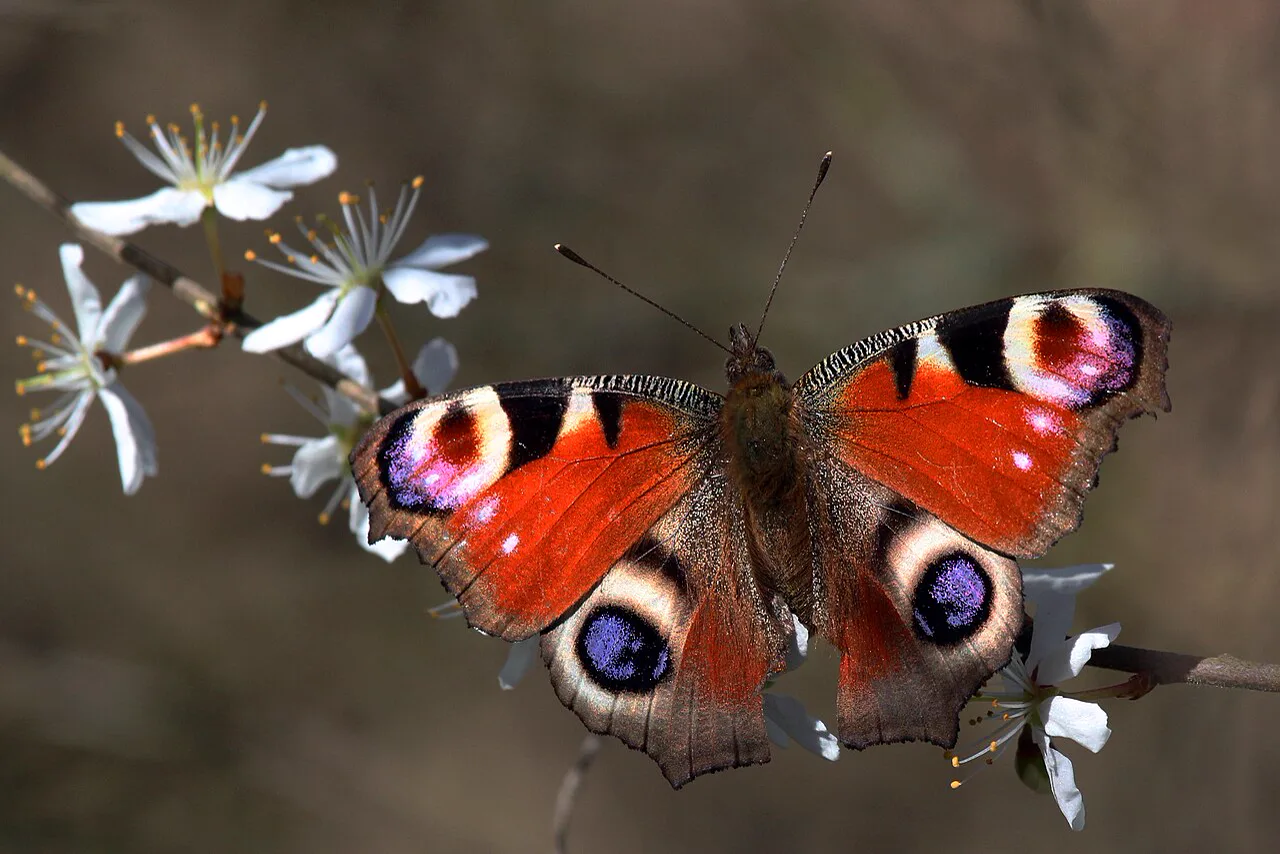
Microscopic ridges scatter and interfere with light, creating structural colors that shift as the wing or viewer moves.
Irregular outlines, muted undersides, false veins, and stillness can make a resting butterfly disappear into bark or fallen foliage.
Many butterflies perceive ultraviolet. Flowers and potential mates may display UV patterns that guide feeding or courtship.
Chemical receptors on the legs help a female assess whether a leaf may be suitable food for her caterpillars.
Female Queen Alexandra’s Birdwings can approach 25–28 cm across, though individuals vary and measurements depend on method.
Many moths fly by day and some butterflies move in dim light. Club-tipped antennae are often a better butterfly clue, though nature keeps exceptions.