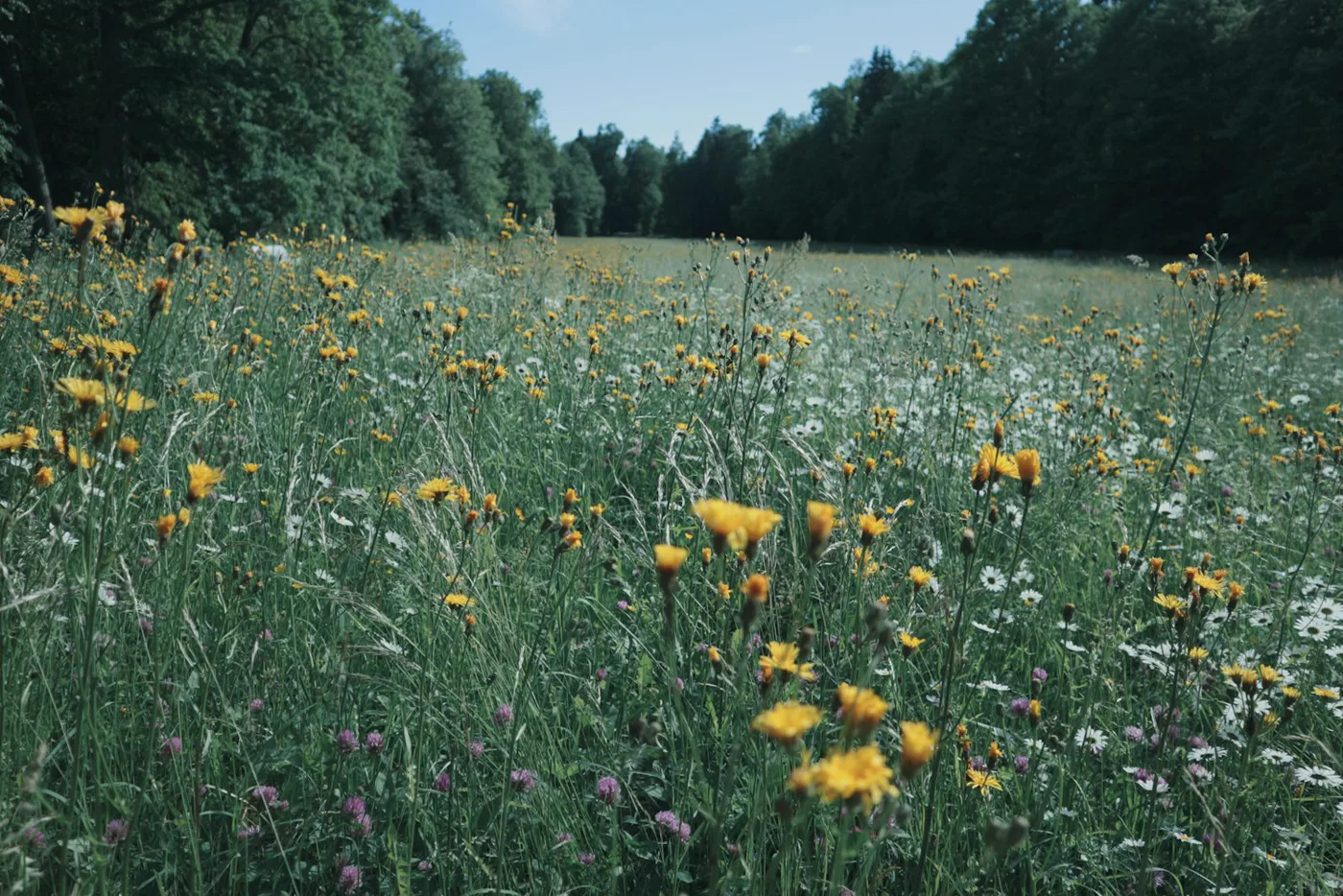
Restore habitat
Good restoration begins with local ecology. Protect existing high-quality habitat first; then reconnect patches with native vegetation, varied structure, and continuous seasonal resources. Monitor what returns and adjust management over time.
- Retain native host plants and flowering areas.
- Create sunny, sheltered edges rather than uniform planting.
- Reduce mowing and stagger it across different patches.
- Work with local ecologists and land managers when possible.
Garden responsibly
Choose plants native to your region, especially known larval hosts. Avoid treated nursery plants when possible and ask suppliers about systemic pesticides. Leaf chewing is evidence that the garden is working, not failing.
A useful garden question
“Can a butterfly complete its entire life cycle here?” Nectar alone feeds adults; successful habitat also supports eggs, larvae, pupae, and overwintering stages.
Join citizen science
Structured observations can help researchers track ranges, emergence timing, abundance, and migration. Select a reputable program operating in your country, follow its identification and privacy guidance, and record effort as carefully as sightings.
Useful records usually include date, location, clear photographs, species or uncertainty, habitat notes, and the amount of time spent observing.
Observe ethically
- Watch from a respectful distance and avoid repeated disturbance.
- Do not handle wings; scales can be dislodged and legs injured.
- Stay on established paths in sensitive habitats.
- Never collect rare species or remove eggs and larvae without legal authority and a sound scientific purpose.
- Avoid publishing precise locations of vulnerable populations.
Schools and communities
Map existing green spaces, convert small lawn areas into native planting, create no-spray zones, schedule mowing around bloom and breeding periods, and document changes through a shared seasonal field journal.
One class
Adopt a planting bed and record weekly flower visitors.
One neighborhood
Link small gardens into a visible pollinator corridor.
Photography without pressure
Use longer focal lengths and patient observation instead of repeated close approaches. Do not chill, restrain, bait, relocate, or manipulate a butterfly for a photograph. Avoid trampling host plants and never disclose the precise location of a vulnerable population.
Responsible butterfly tourism
Choose operators and conservatories that can explain how they source animals, prevent invasive releases, support habitat, and follow local wildlife law. Favor experiences centered on intact ecosystems and community benefit rather than handling or souvenir collection.